
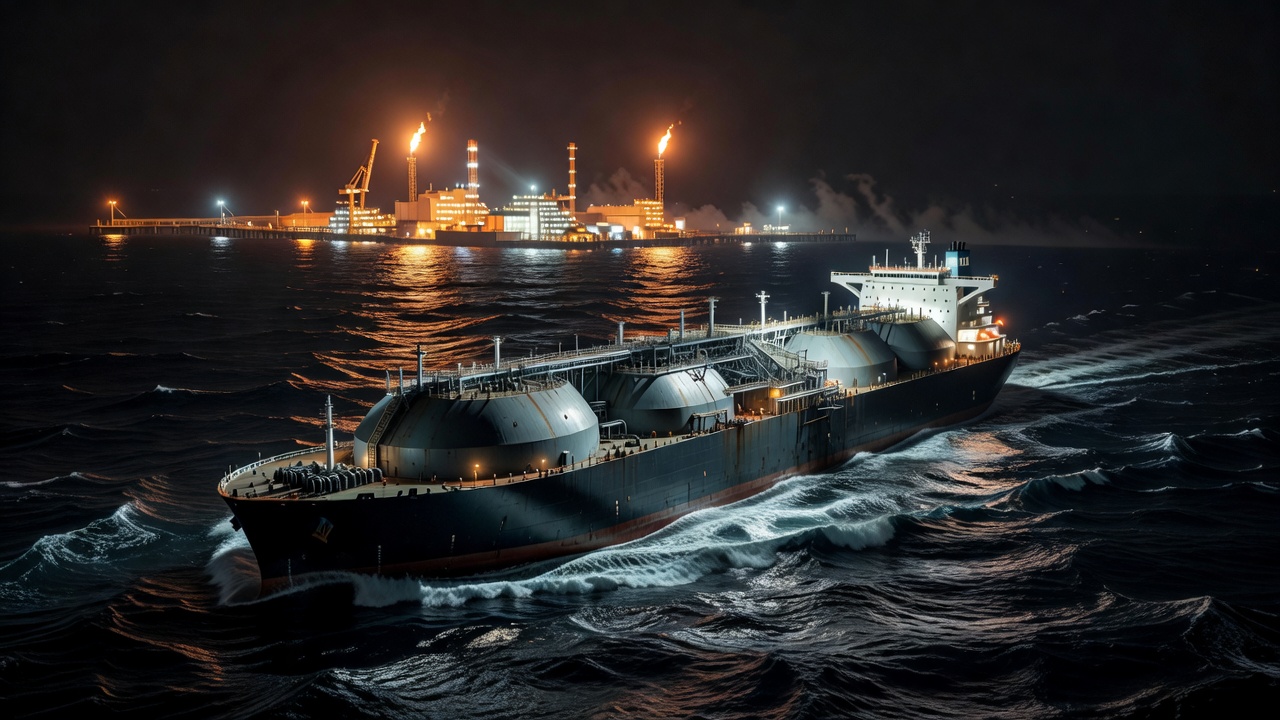
The Strait of Hormuz is not just a shipping lane—it is the artery through which approximately 20–25% of the world’s seaborne crude oil and roughly 20% of global liquefied natural gas (LNG) flows. The 2026 Iran war has struck both flows simultaneously. Qatar, the world’s largest LNG exporter with approximately 93% of its LNG exports transiting the Strait, declared force majeure at its Ras Laffan terminal in spring 2026. VLCC crude tanker day rates hit all-time records. European and Asian gas prices surged sharply. This is the energy commodity crisis at the Strait of Hormuz—and what it means for businesses dependent on these critical supply chains.
Qatar LNG: Force Majeure at Ras Laffan
Qatar’s Ras Laffan Industrial City is one of the largest single-site LNG production complexes in the world, supplying customers across Asia, Europe, and the Americas. Approximately 93% of Qatar’s LNG exports transit the Strait of Hormuz. When the IRGC restricted the Strait following Operation Epic Fury in February 2026, Qatar’s LNG operators faced an impossible operational environment: tankers unwilling or unable to transit the Strait, elevated war-risk insurance premiums that made voyages economically prohibitive, and direct threat from Iranian anti-ship capabilities. Force majeure was declared in spring 2026, allowing Qatar’s LNG operators to legally suspend delivery obligations while the force majeure condition persists. European buyers who had counted on Qatari LNG to replace Russian pipeline gas found themselves facing an acute secondary supply shock on top of an already tight market.
LNG Tanker Rates: A Record Surge
LNG tanker spot rates have surged more than 40% since the crisis began. As of August 2026, Atlantic LNG carrier rates stand at approximately $61,500 per day and Pacific routes approximately $41,000 per day. The combination of route diversions—LNG cargoes that do move must go around the Cape of Good Hope, adding significant voyage length and cost—and genuine supply constraint from Qatar’s force majeure has tightened the global LNG tanker market sharply. Buyers of LNG face both higher spot vessel rates and a significantly longer voyage time, compounding the cost impact substantially versus pre-crisis conditions.
VLCC Crude Tankers: All-Time Rate Records
Very Large Crude Carriers (VLCCs) have seen some of the most dramatic rate movements of any vessel type during the 2026 crisis. Day rates for VLCCs on the Middle East–China route have surged to approximately $424,000 per day—an all-time record and an increase of roughly 842% from pre-crisis levels of approximately $45,000 per day. This extraordinary premium reflects genuine scarcity: tankers willing and able to navigate restricted access to the Gulf command a massive market premium. For crude oil buyers in China, South Korea, and Japan that depend heavily on Gulf supply, this represents an enormous increase in delivered oil cost—layered on top of the elevated Brent crude spot price itself.
Energy Commodity Impact: At a Glance
| Commodity | Strait Exposure | Key Impact | Price/Rate Change |
|---|---|---|---|
| Brent Crude Oil | ~20–25% of seaborne trade | Supply disruption; Gulf producers severely constrained | Peaked $138/bbl; current ~$87/bbl (↑~21%) |
| Qatar LNG | ~93% of exports | Force majeure at Ras Laffan; deliveries suspended | European gas ↑44%; Asian gas ↑66% |
| VLCC Tanker Day Rate | Middle East–China route | All-time record; acute vessel scarcity premium | ~$424,000/day (↑~842%) |
| LNG Tanker Day Rate | Atlantic and Pacific routes | Cape rerouting; supply squeeze driving rates up | Atlantic ~$61,500/day (↑>40%) |
| Middle East Petrochemicals | High | Supply chain disruption; production constrained | Elevated, varying by product |
| Fertilizers | Significant | Supply chain disruption; food security concerns | Elevated; South Asia most exposed |
Global Gas Price Spillover
The force majeure at Ras Laffan and broader disruption to Gulf LNG supply have triggered significant gas price increases on two continents. European TTF natural gas prices are up approximately 44% since the crisis began; Asian JKM prices are up approximately 66%. These increases ripple through electricity generation costs, industrial energy costs, and ultimately consumer energy bills. Countries in South and Southeast Asia that had been building LNG import infrastructure in recent years are particularly exposed, as spot market LNG prices have surged beyond what many buyers budgeted for when designing their import programmes. The energy security implications of the Hormuz crisis have made natural gas supply diversification a political as well as commercial priority for governments across the region.
Pipeline Alternatives: Partial but Important Mitigation
UAE and Saudi Arabia have partially mitigated the disruption to their oil exports through strategic pipeline infrastructure. The Abu Dhabi Crude Oil Pipeline—the 380-kilometre Habshan–Fujairah line—bypasses the Strait entirely, running at capacity since early in the crisis and allowing UAE crude exports to continue largely uninterrupted. Saudi Arabia has similarly maximized throughput on its East–West Petroline, redirecting crude to the Yanbu export terminal on the Red Sea coast. These pipelines provide meaningful but incomplete relief: they cannot fully replace sea-lane capacity, and their benefits are limited to UAE and Saudi exports. Other Gulf producers—Kuwait, Iraq, Bahrain, Qatar, and Iran itself—lack comparable pipeline bypass options and face far greater export constraints.
What This Means for Energy-Intensive Businesses
Companies with significant energy cost exposure—manufacturers, chemical producers, shipping operators, and utilities—should factor continued energy price elevation into their financial planning through at least 2027. Those sourcing petrochemicals or feedstocks from the Middle East face both supply disruption and elevated prices simultaneously. With European and Asian gas markets significantly tighter than pre-crisis levels, energy procurement strategies, hedging positions, and alternative supply sourcing all deserve urgent attention from procurement and supply chain leadership. The window to secure forward supply at current prices may be limited as the crisis evolves.
Emirates Freight: Your Energy Cargo Partner
Emirates Freight has experience handling specialist cargo including energy-related freight, industrial equipment, and petrochemical shipments across the UAE and Gulf region. Our team can advise on routing options, port access, and logistics solutions for energy commodity supply chains operating in the current complex environment. We work directly with carriers serving Fujairah and other bypass ports to keep energy freight moving efficiently.
Reach out to Emirates Freight at emiratesfreight.com to discuss your energy freight requirements and get a competitive, up-to-date quote for the 2026 market.