
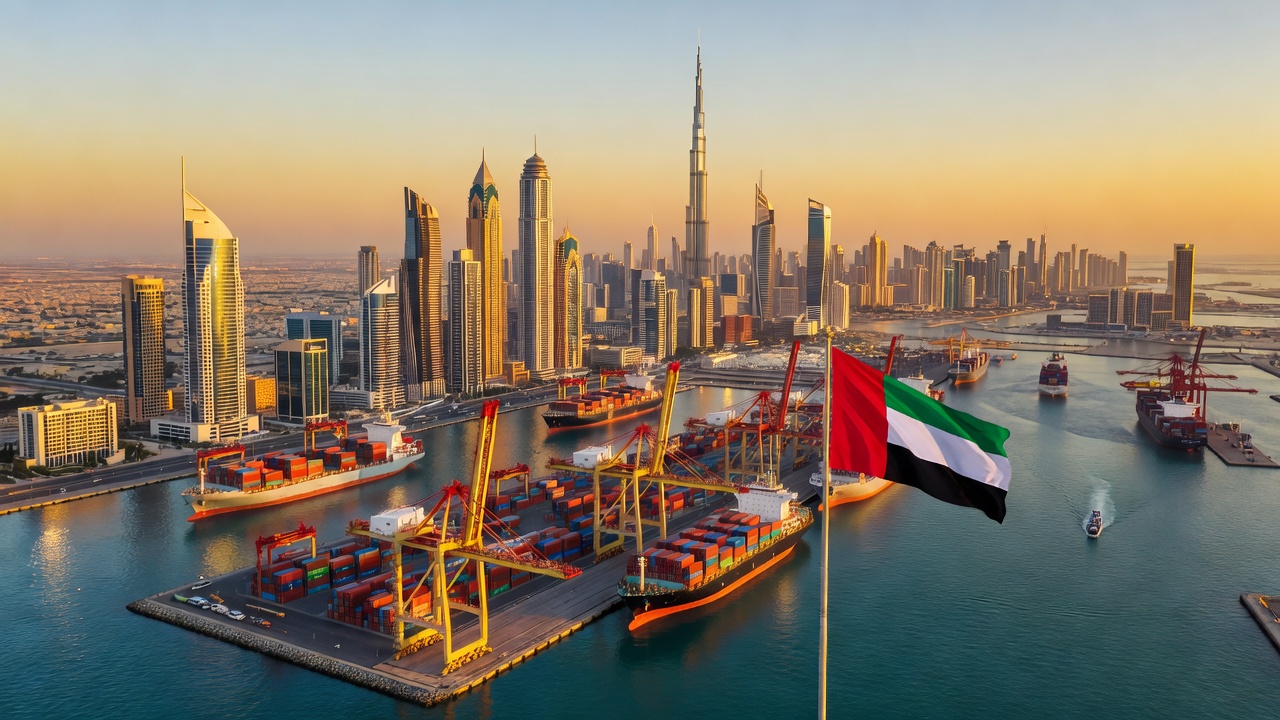
The UAE has long been the logistics hub of the Middle East—a gateway for imports serving the Gulf, a transhipment centre connecting Asia with Africa and Europe, and a global freight node for everything from consumer goods to industrial equipment. In 2026, the UAE’s role has become even more critical as the Hormuz crisis has forced a fundamental rethink of how cargo moves to, from, and through the Gulf. For importers and exporters, understanding the new logistics landscape—and knowing how to navigate it with the right partners—can be the difference between supply chain resilience and costly disruption. This practical guide covers the key changes and what you need to know about shipping through the UAE today.
The New UAE Port Reality
Pre-crisis, Jebel Ali was the default answer to almost any Gulf logistics question. It remains the UAE’s dominant port by volume, but its reliability for time-sensitive cargo has been significantly affected by the Hormuz disruption. Carrier suspensions of Gulf calls, rollovers, and late departures have made Jebel Ali a more uncertain option than it was twelve months ago. The smart logistics response has been to embrace the UAE’s east coast—Fujairah and Khor Fakkan on the Gulf of Oman—as alternatives or complements. Container handling at Khor Fakkan has surged approximately 25-fold since the crisis; DP World is building a new container terminal at Fujairah. For cargo destined to inland UAE, the land bridge solution—sea to east coast, then truck to Jebel Ali or Dubai—has become a widely used and increasingly refined operational alternative that experienced forwarders are now executing daily.
Your Routing Options in 2026
Option 1 — Direct Gulf routing via Jebel Ali: Still available but subject to war-risk surcharges of up to $1,500/TEU, elevated insurance premiums, and a higher probability of rollovers and delays. Best suited for non-time-sensitive cargo where Jebel Ali is the true final destination and the customer can absorb uncertainty.
Option 2 — East coast bypass (Fujairah or Khor Fakkan plus land bridge): More reliable for most cargo categories in the current environment. Eliminates Strait risk, typically attracts lower war-risk surcharges. Adds some cost and time for the approximately 130-kilometre overland truck leg to Dubai. Best for time-sensitive cargo and importers who need supply chain predictability.
Option 3 — Cape of Good Hope routing: For imports from Asia, Cape routing adds 10–14 days but avoids the Gulf entirely. Increasingly the default for Asia–Europe cargo and available as an option for UAE-destined shipments with sufficient lead time. Highest absolute transit time but most predictable routing away from conflict zones.
Routing Options Compared
| Option | Port Used | Strait Risk? | Approx. Transit (from Asia) | Key Surcharges | Reliability |
|---|---|---|---|---|---|
| Gulf routing | Jebel Ali | Yes | Pre-crisis time +1–3 weeks | Up to $4,500/FEU total | Moderate — rollovers common |
| East coast + land bridge | Fujairah / Khor Fakkan | No | Pre-crisis time +3–5 days | Lower war-risk surcharge | Higher — currently preferred |
| Cape of Good Hope | Any UAE port | No | Pre-crisis time +10–14 days | Standard Cape surcharges | Good — predictable but slow |
Booking Lead Times: How Far Ahead to Plan
In the current environment, booking lead times have extended significantly across all UAE-related trade lanes. Spot capacity on Gulf routes is constrained, and popular lanes can sell out weeks in advance. The following lead times are a reasonable baseline for 2026 planning, assuming relatively stable current conditions:
- UAE Gulf port cargo (Jebel Ali): Book 3–4 weeks in advance minimum
- UAE east coast (Fujairah/Khor Fakkan): Book 2–3 weeks in advance
- Asia–UAE via Cape routing: Budget 6–8 weeks total transit time from booking to delivery
- Europe–UAE: 4–6 weeks total depending on origin port and routing
Any escalation of the conflict, additional Strait incidents, or major port disruption could extend these timelines further. Buffer your supply chain and purchase orders accordingly.
Freight Rate Budgeting in 2026
Rate budgeting has become considerably more complex than it was a year ago. Beyond the base ocean freight rate—which has roughly doubled on key transpacific and Asia–Europe lanes—shippers need to account for multiple layers of additional cost. Emergency conflict surcharges can reach $3,000 per FEU. War-risk surcharges apply to Gulf-routed cargo at up to $1,500 per TEU. Bunker adjustment factors are significantly elevated due to the 55% fuel cost increase. Port congestion surcharges apply at several affected ports. If using the land bridge, inland transport costs for the UAE truck leg must be added. Total landed freight costs for Gulf-region imports are typically 60–120% higher than pre-crisis norms depending on origin and routing. Finance and procurement teams must update landed cost models and ensure supply chain budgets reflect current realities.
Choosing the Right Freight Forwarder in 2026
In normal times, freight forwarder selection is primarily about price and service. In the current disrupted environment, additional factors matter enormously. Look for forwarders that offer real-time carrier intelligence—the ability to tell you today which carriers are actively sailing to which UAE ports, and which are experiencing rollovers. Port-side relationships at Fujairah and Khor Fakkan, not just Jebel Ali, are essential. Land bridge capability—the ability to coordinate the truck leg from east coast to Dubai—separates forwarders who can solve problems from those who cannot. War-risk expertise and the ability to advise on minimizing surcharge exposure are increasingly valuable. Finally, financial stability and an established track record matter more in a volatile market, where you need to trust your forwarder to deliver on bookings.
UAE Customs and Documentation: Getting It Right
Regardless of routing, UAE customs requirements remain standard. Ensure your commercial invoice, packing list, certificate of origin, and bill of lading are accurate and complete before cargo moves. Documentation errors are particularly costly in the current environment, where any hold-up can result in a missed vessel, additional port storage costs at a congested facility, or rollover to a later sailing. Electronic filing and advance customs registration help minimize clearance time. Your freight forwarder should be proactively guiding you through documentation requirements as a core part of their service—not as an afterthought. If your current forwarder is not doing this, it is time to reconsider your partnership.
Ship Smarter with Emirates Freight in 2026
Emirates Freight is a UAE-based freight forwarder with deep operational experience across Jebel Ali, Fujairah, and Khor Fakkan. We have the carrier relationships, port-side presence, and inland logistics capability to handle your cargo across all three routing options—Gulf, land bridge, or Cape. In 2026’s complex environment, having a trusted partner with real-time market intelligence and genuinely flexible solutions is not a luxury. It is a necessity for any business that depends on reliable cargo movement through the UAE.
Whether you are importing consumer goods, industrial equipment, raw materials, or perishables, Emirates Freight can design a logistics solution that works for your business and budget.
Contact Emirates Freight today at emiratesfreight.com for a competitive quote and personalised freight consultation. Our team is ready to help you navigate 2026 with confidence.