
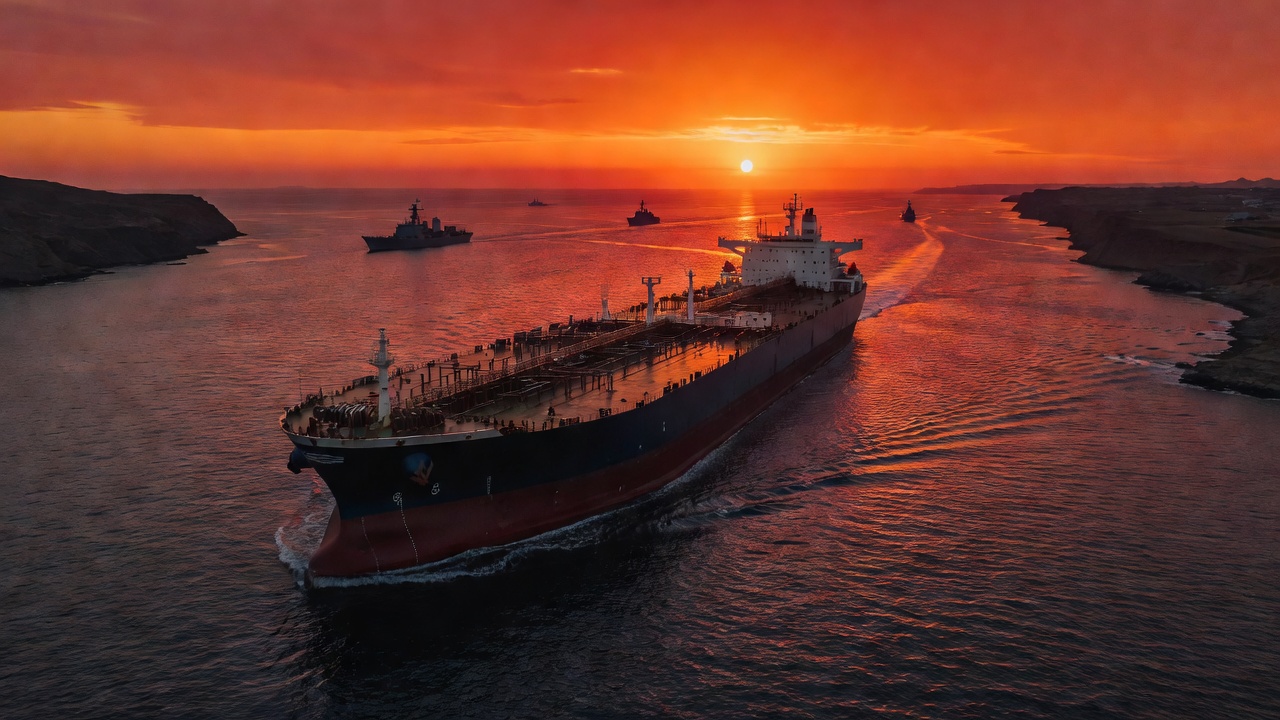
The Strait of Hormuz, the 21-mile-wide chokepoint between Iran and Oman, carries roughly 20–25% of the world’s seaborne oil trade. On February 28, 2026, US and Israeli forces launched Operation Epic Fury, targeting Iran’s nuclear and military infrastructure. Iran’s Islamic Revolutionary Guard Corps (IRGC) responded by restricting and effectively closing the Strait to commercial shipping. Six months later, what was once one of the world’s busiest maritime corridors sees just 2–9 vessel transits per day, down from approximately 130. The consequences for global shipping, energy markets, and freight costs have been severe and far-reaching.
Operation Epic Fury and the Strait Shutdown
The February 28, 2026 strikes marked a dramatic escalation in long-running geopolitical tensions. Within days, IRGC patrol boats, mines, and anti-ship missile batteries were deployed across the Strait. Commercial shipping operators, facing unacceptable risk, began diverting almost immediately. Major carriers including Maersk, CMA CGM, and Hapag-Lloyd suspended Hormuz transits within the first two weeks, rerouting fleets around the Cape of Good Hope—adding 10–14 extra sailing days per voyage. The US simultaneously established a naval blockade on Iranian ports, a measure it has maintained through August 2026 with no firm end date announced. As of August 14, 2026, Reuters reported that the US Navy issued fresh warnings to Iran following confirmed attacks on two additional vessels near the Strait. Pre-war volumes are widely considered unlikely to resume without a durable diplomatic settlement.
The Scale of Disruption: Key Statistics
The data paints a stark picture of a global trade corridor in crisis. Hormuz vessel traffic has collapsed from approximately 130 ships per day before the conflict to between 2 and 9 per day currently—a reduction of approximately 95%. Brent crude oil peaked above $138 per barrel during the crisis and currently trades around $87. Container freight rates have roughly doubled on key trade lanes. VLCC crude tanker day rates on the Middle East–China route have reached approximately $424,000 per day, an all-time record. Bunker fuel costs are up approximately 55% since the crisis began.
| Metric | Pre-War (Jan 2026) | Current (Aug 2026) | Change |
|---|---|---|---|
| Hormuz Daily Transits | ~130 ships/day | 2–9 ships/day | ↓ ~95% |
| Brent Crude ($/bbl) | ~$72 | ~$87 (peaked $138) | ↑ ~21% |
| Shanghai–LA Rate (40ft) | ~$2,200 | ~$4,565 | ↑ ~107% |
| Shanghai–NY Rate (40ft) | ~$2,600 | ~$5,505 | ↑ ~112% |
| VLCC Tanker Day Rate | ~$45,000/day | ~$424,000/day | ↑ ~842% |
| Cape Rerouting Extra Time | N/A | +10–14 days/leg | New impact |
| Emergency Conflict Surcharge | $0 | Up to $3,000/FEU | New charge |
| War-Risk Surcharge | $0 | Up to $1,500/TEU | New charge |
The Global Trade Ripple Effect
Beyond crude oil, approximately 20% of the world’s liquefied natural gas (LNG) trade flows through the Strait—primarily from Qatar’s Ras Laffan terminal. Qatar declared force majeure on LNG deliveries in spring 2026, triggering European gas price spikes of 44% and Asian gas price spikes of 66%. Fertilizer supply chains dependent on Middle Eastern petrochemicals have also been disrupted, raising food security concerns across South Asia and East Africa. Container shipping, still absorbing the compounding shock of Red Sea disruptions from 2024–25, faced a second major crisis. Transpacific rates rose approximately 40%, and Asia–North Europe rates are up around 20%. The breadth of the impact—from energy to food to consumer goods—makes the 2026 Hormuz crisis one of the most significant supply chain events of the decade.
How Carriers and the Region Have Responded
Maersk, CMA CGM, Hapag-Lloyd, and virtually every major carrier suspended Hormuz transits in the first weeks of the conflict. Some began routing through UAE east coast ports—particularly Fujairah and Khor Fakkan on the Gulf of Oman—to bypass the Strait for Gulf-destined cargo. Others coordinated land bridge solutions, moving containers by truck across the UAE from east coast to Jebel Ali. Omani ports including Sohar, Salalah, and Duqm have absorbed increased traffic as regional alternatives. For energy exports, the Abu Dhabi Crude Oil Pipeline (Habshan–Fujairah) has run at capacity, allowing UAE crude to bypass the Strait entirely. Saudi Arabia similarly maximized its East–West Petroline to Yanbu, redirecting crude to the Red Sea coast.
What Importers and Exporters Must Do Now
Businesses shipping to or from the Middle East should budget for significantly longer transit times—typically two to four additional weeks for Gulf-bound cargo compared to pre-crisis norms. War-risk insurance premiums have risen sharply and should be reviewed for all Gulf-routed shipments. Cargo rollovers at Gulf ports, particularly Jebel Ali, have become frequent as carrier capacity is constrained. Supply chain planners need to extend lead times, hold larger safety stocks, review insurance coverage, and work closely with freight forwarders who have real-time visibility into carrier schedules and port conditions. Emergency conflict surcharges and war-risk surcharges must be factored into all landed cost calculations.
Looking Ahead: No Quick Resolution
The US has vowed to maintain its naval blockade indefinitely. As of August 2026, diplomatic negotiations remain stalled, and attacks near the Strait continue sporadically. Industry analysts broadly agree that a sustained return to pre-war Hormuz transit volumes requires a formal ceasefire or comprehensive diplomatic agreement—neither of which appears imminent. Businesses that have already adapted their supply chains to the new routing reality are better positioned; those still relying on pre-war transit times and rates face continued disruption and escalating cost exposure. Forward planning and expert freight management have rarely been more essential.
Navigate the Crisis with Emirates Freight
Emirates Freight specialises in freight forwarding across the UAE, the Gulf, and global trade corridors. Our team has hands-on experience navigating disrupted routes—whether securing capacity at Fujairah, coordinating land bridge solutions, or optimising your supply chain for Cape of Good Hope routing. If you’re facing delays, surcharges, or uncertainty about your cargo movement, we’re ready to help.
Contact Emirates Freight today at emiratesfreight.com for a tailored freight solution and competitive quote. Our specialists are ready to help you navigate the most challenging shipping environment in a generation.