
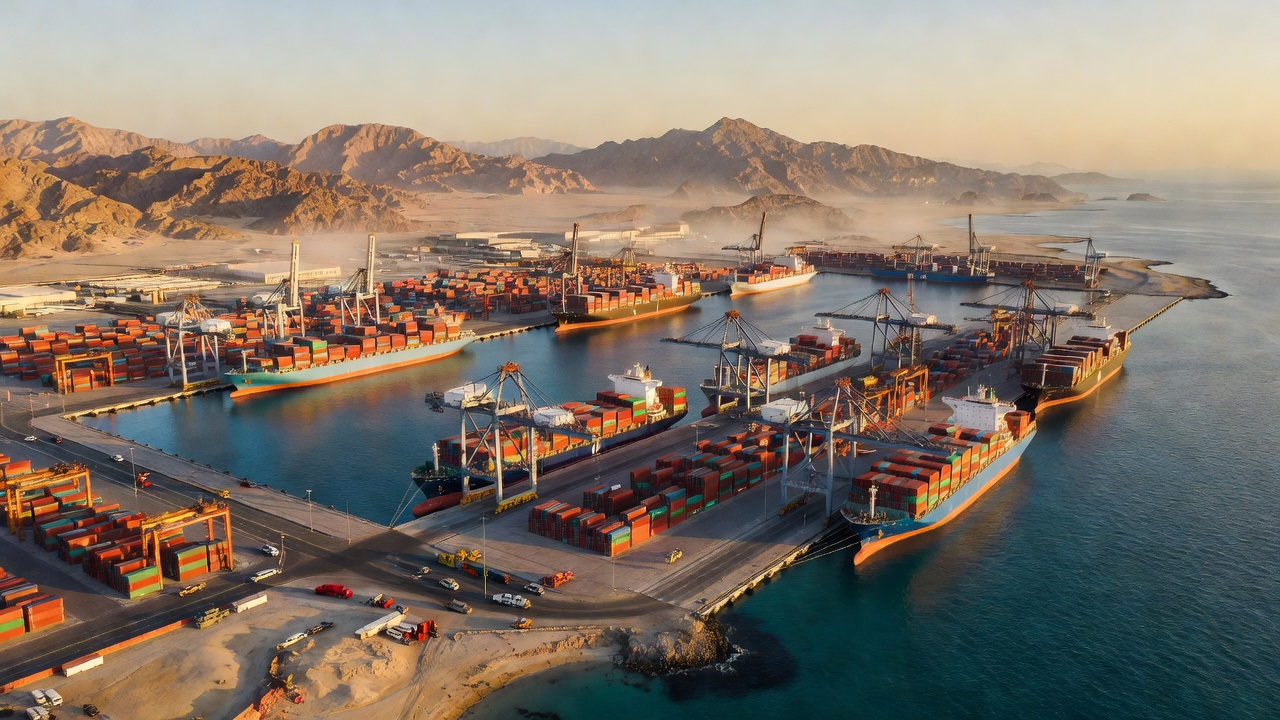
Before February 2026, Fujairah and Khor Fakkan were well-known in shipping circles but largely overshadowed by the UAE’s dominant hub at Jebel Ali in Dubai. The Strait of Hormuz crisis changed that overnight. Positioned on the Gulf of Oman—outside the contested Strait—these east coast ports have transformed into the region’s primary maritime bypass hubs. Container handling at Khor Fakkan has surged approximately 25-fold from pre-crisis baseline levels. DP World has announced a new container terminal at Fujairah, cementing the east coast’s new strategic importance. Here is how the UAE’s east coast became the lifeline of Middle East shipping in 2026.
Why Jebel Ali Is Struggling in 2026
Jebel Ali, located on Dubai’s Gulf coast inside the Strait of Hormuz’s effective security zone, remains the UAE’s largest port by annual volume. However, since the Hormuz crisis began in February 2026, Jebel Ali has faced severe operational disruption. Carrier suspensions of Gulf calls have led to significant delays, late departures, and container rollovers as shipping lines prioritize available capacity on more accessible routes. Vessels that do enter the Gulf face elevated war-risk insurance premiums, restricted routing options, and the threat of IRGC interdiction. For time-sensitive cargo, Jebel Ali has become a considerably less reliable gateway than it was twelve months ago—a challenge that freight planners cannot afford to ignore.
Fujairah: From Bunkering Port to Strategic Hub
Fujairah has long been one of the world’s largest bunkering ports, primarily known as a refuelling stop for vessels transiting the Gulf of Oman. Its position outside the Strait makes it naturally suited to serve as a bypass hub, and since February 2026, it has fulfilled that role with growing intensity. Container ships that previously called at Jebel Ali are diverting to Fujairah, where cargo is offloaded and transferred by road or feeder service to inland UAE destinations. In mid-2026, DP World announced plans for a new container terminal at Fujairah, a clear signal that east coast port infrastructure is being permanently upgraded to meet the new demand profile. In March 2026, Iranian drone strikes hit Fujairah’s oil storage facilities—a stark reminder that bypass hubs are not entirely beyond the conflict’s reach—though container operations at the port continued throughout the incident.
Khor Fakkan: The 25x Traffic Surge
Khor Fakkan, operated by Sharjah’s Port Authority on the UAE’s east coast, is one of the few natural deepwater ports in the region capable of handling large container vessels. Since the Hormuz crisis, container handling volumes at Khor Fakkan have surged approximately 25 times their pre-war baseline, making it one of the fastest-growing container ports in the world by percentage volume. Vessels are calling Khor Fakkan as a direct replacement for Gulf port calls, with cargo trucked to Jebel Ali, Dubai, and Abu Dhabi for final distribution. The operational pressure has been intense: berth availability and turnaround times have both been tested by the sudden volume surge, and port authorities have been rapidly scaling operations to meet demand.
UAE East Coast vs. Gulf Ports: A Comparison
| Port | Location | Strait Risk? | Status (Aug 2026) | Primary Role |
|---|---|---|---|---|
| Jebel Ali (Dubai) | Gulf Coast | Yes | Disrupted — rollovers, delays | UAE’s largest hub; reduced reliability |
| Fujairah | Gulf of Oman | No | High volume; DP World expansion planned | Bypass hub; bunkering; new container terminal |
| Khor Fakkan | Gulf of Oman | No | Very high volume (~25x surge) | Primary bypass container port |
| Sohar (Oman) | Gulf of Oman | No | Increased activity | Regional alternative; industrial port |
| Salalah (Oman) | Arabian Sea | No | Increased transhipment | Transhipment hub; feeder services |
| Duqm (Oman) | Arabian Sea | No | Growing logistics activity | Industrial and logistics alternative |
The UAE Land Bridge Solution
One of the most operationally innovative responses to the Hormuz crisis has been the UAE land bridge. Cargo arriving at Fujairah or Khor Fakkan is loaded onto trucks and transported approximately 130 kilometres across the UAE to Jebel Ali or Dubai for final distribution. While this adds some cost and transit time compared to a direct Gulf port call, it is substantially faster than Cape of Good Hope rerouting and eliminates Strait of Hormuz risk entirely. Emirates freight forwarders with strong trucking networks and UAE inland logistics capability have been uniquely positioned to facilitate this solution. As the land bridge has scaled up, specialized logistics providers have expanded truck fleets and warehouse capacity along the east–west corridor to handle increasing volumes.
The Abu Dhabi Crude Oil Pipeline: Bypassing the Strait for Energy
For energy exporters, the Abu Dhabi Crude Oil Pipeline—the 380-kilometre Habshan–Fujairah pipeline—has been running at capacity since the crisis began. Connecting Abu Dhabi’s oil fields directly to Fujairah’s export terminal on the Gulf of Oman, this pipeline bypasses the Strait of Hormuz entirely, allowing UAE crude exports to continue largely uninterrupted even as tanker traffic through the Strait has collapsed. With a capacity of approximately 1.5 million barrels per day, the pipeline represents a structural strategic hedge for UAE energy exports that other Gulf producers simply do not have. For companies sourcing UAE crude or planning energy freight logistics, Fujairah’s position as the terminal for this pipeline makes it a uniquely important facility in the current environment.
Practical Implications for Your Cargo in 2026
If you are importing or exporting cargo through the UAE in 2026, the practical implications of these port dynamics are significant. Gulf-side deliveries to or from Jebel Ali carry elevated risk of delay and rollover; booking lead times should be extended by at least two weeks relative to pre-crisis norms. East coast port options—Fujairah and Khor Fakkan—offer better current reliability for most cargo categories, with land bridge connectivity covering the final leg to Dubai, Abu Dhabi, or Sharjah. War-risk surcharges are typically lower for east coast routing than for Gulf routing. Consulting with a knowledgeable freight forwarder before booking is essential to selecting the right port and routing combination for your specific cargo and timeline.
Emirates Freight — Your UAE Logistics Partner
Emirates Freight operates across all major UAE ports—Jebel Ali, Fujairah, Khor Fakkan, and beyond—with strong carrier relationships and a proven trucking network for land bridge logistics. Our team understands the current operational landscape intimately and is committed to finding the most reliable, cost-effective routing solution for your cargo regardless of where market conditions stand.
Visit emiratesfreight.com to connect with our team and request a quote for your UAE shipment. Let Emirates Freight navigate the complexity so you can focus on your business.